Drone-assisted snow, ice clearing takes off in China

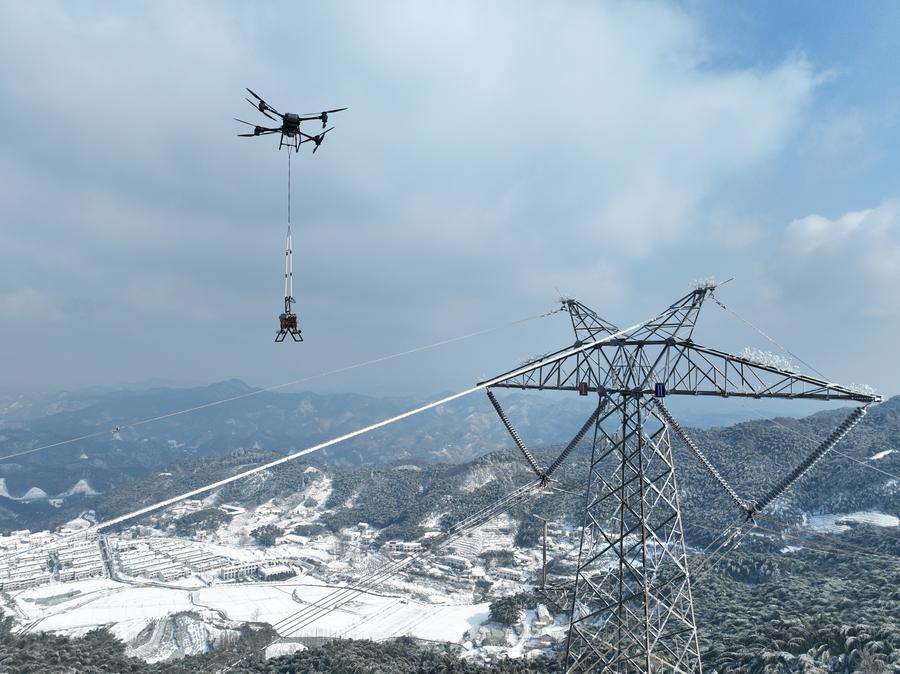
URUMQI, Feb. 28 (Xinhua) -- When power lines overhead were coated with a layer of ice, threatening power supplies to thousands of households, the effort to clear it did not feature a truck full of linemen but an unmanned aircraft instead.
The recent de-icing operation took place in a mountainous area in northwest China's Xinjiang Uygur Autonomous Region, where the vast hinterland endures heavy snowfall through its long winter months. Photos circulating on social media revealed images of maintenance staff using a drone fitted with an insulating stick to knock thick sheets of ice off power lines.
This effort is just one instance of a broad tech revolution across China, which is seeing more power companies turning to drones not just for inspections but also for direct operational intervention. In the past, workers in remote, hard-to-reach and freezing-cold areas had to climb ladders to carry out critical maintenance. Today, many of these high-risk tasks are performed by drones.
The shift, notably, is not only about safety but also about cost.
According to State Grid Xinjiang Electric Power Co., Ltd., which has been using heavy-lift drones for de-icing since December 2024, cost savings resulting from these operations have currently reached over 1 million yuan (about 144,000 U.S. dollars).
During a de-icing task in late January, its staff controlled a drone to remove ice from power lines via mechanical tapping. The whole process took only 40 minutes. It would have required hours of intense manual labor in the past.
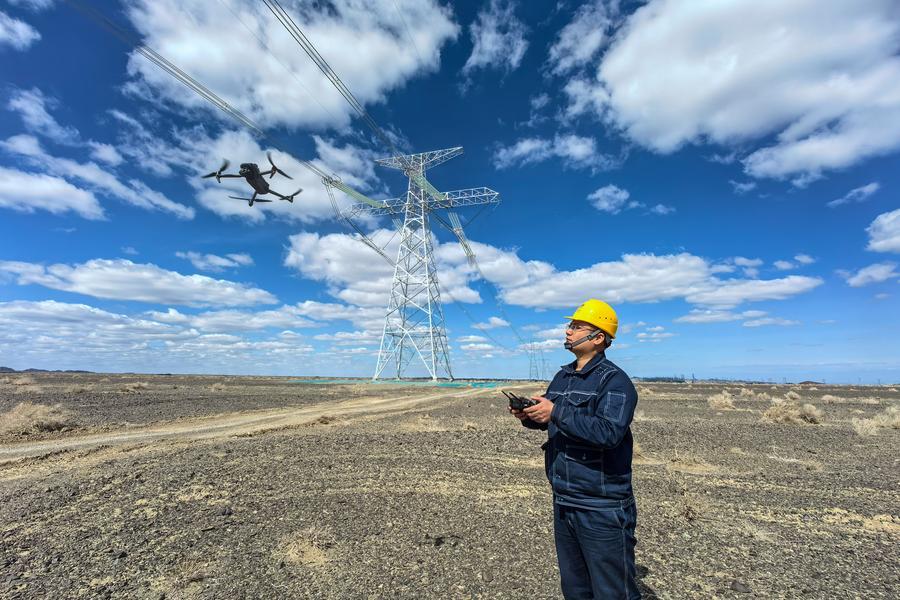
The company has deployed more than 1,600 drones, and over 1,300 of its employees have obtained drone pilot certifications. It said drone operation has become an essential skill for all its power workers.
Drone-assisted clearing is not limited to power grid de-icing. It also helps farmers with snow removal.
"I cleared snow from my two hectares of orange trees in just over two hours using a drone," said Zhou Zongbao, an orange grower in Badong County, central China's Hubei Province. After a heavy snowfall in the area in January, Zhou used the rotors of a flying drone to generate a powerful airflow, which evenly blew snow off branches, thereby clearing his orange trees.
Snow removal is an urgent task for such farmers. Orange cultivation is their main source of income. Accumulated snow can lead to broken branches, while cold damage can reduce the fruit's sweetness and appearance.
Compared to traditional manual snow removal, drones are far more efficient. Operators monitor real-time video and adjust the drone's flight path, easily reaching steep slopes without damaging branches or fruit. Local sources said drone-assisted snow removal cuts costs by about 30 percent.
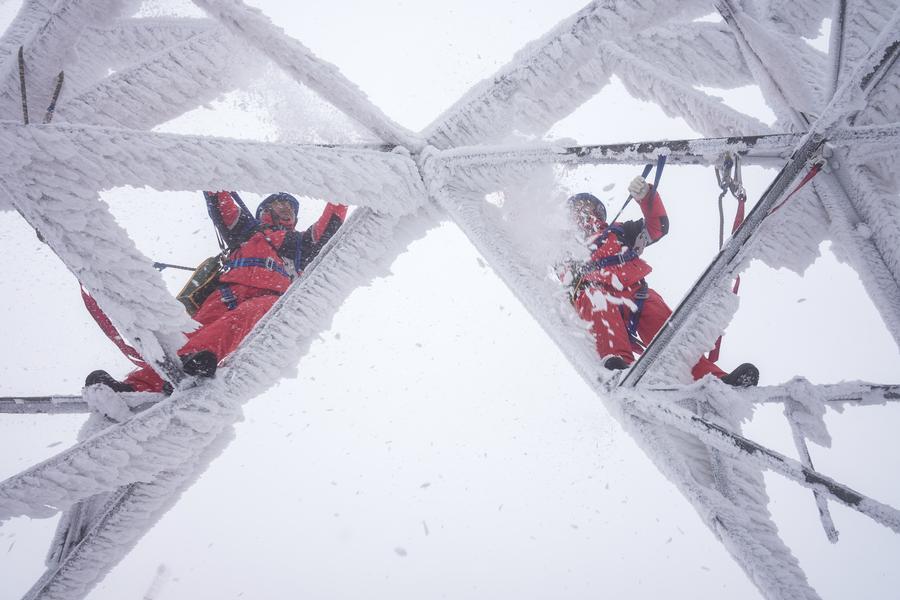
The snow removal business has also created jobs and increased incomes in many parts of China.
For example, in Suzhou City, east China's Anhui Province, a company charges about 200 yuan on average to clear snow for a standard greenhouse. In Xuchang City, central China's Henan Province, some drone pilots charge 300 yuan per hour for their services. Although prices vary by region, job size and task difficulty, the high returns are attracting more practitioners.
With snow blanketing parts of Xinjiang this week, the snow clearing business there has surged. Beyond established drone services such as delivery and inspection, drone-assisted snow-and-ice clearing is now emerging as another option, showing China's growing capacity to turn technological innovation into practical solutions. ■





Comments