Massive U.S. strikes on Iran raise multiple questions

"Mr. Trump's approach to Iran is reckless. His goals are ill-defined," The New York Times commented in an editorial opinion.
WASHINGTON, Feb. 28 (Xinhua) -- U.S. President Donald Trump said early Saturday morning that U.S. forces have launched a large-scale military campaign against Iran, raising questions about whether the White House is seeking Iran's regime change and how expansive the operation will be. Lawmakers also question the lack of Congress' authorization.
GOALS
In an eight-minute video address from his Mar-a-Lago residence in Florida, Trump said the United States would destroy Iran's missile industry and naval forces, prevent Tehran from acquiring nuclear weapons and neutralize Iran-backed armed groups across the Middle East.
He also urged members of Iran's Islamic Revolutionary Guard Corps, armed forces and police to lay down their weapons in exchange for immunity, and called on the Iranian public to "take over the government" once U.S. military operations conclude -- remarks that analysts said signaled at least an implicit push for regime change.
Trump repeated his claim that Iran is developing long-range missiles capable of reaching the U.S. mainland. Several U.S. media outlets, citing intelligence officials, reported there is no conclusive intelligence to support that assertion. The New York Times reported that a 2025 Defense Intelligence Agency assessment found Iran had not decided to build an intercontinental ballistic missile.
In a brief interview with The Washington Post early Saturday morning, Trump said he hoped his legacy from the Iran strikes would be "freedom for the people" and "a safe country."
"Mr. Trump's approach to Iran is reckless. His goals are ill-defined," The New York Times commented in an editorial opinion.
BROADER CAMPAIGN
The Pentagon has named the operation "Operation Epic Fury," which U.S. officials told news outlets could continue for days or weeks and is expected to surpass the scope of the 12-day U.S.-Israeli strikes on Iranian targets in June 2025.
In the opening wave early Saturday morning, dozens of aircraft scrambled from U.S. bases in the Middle East and from aircraft carriers in regional waters and struck targets across Iran. Initial targets included missile launch sites and other military facilities dispersed throughout the country, according to reports reaching here.
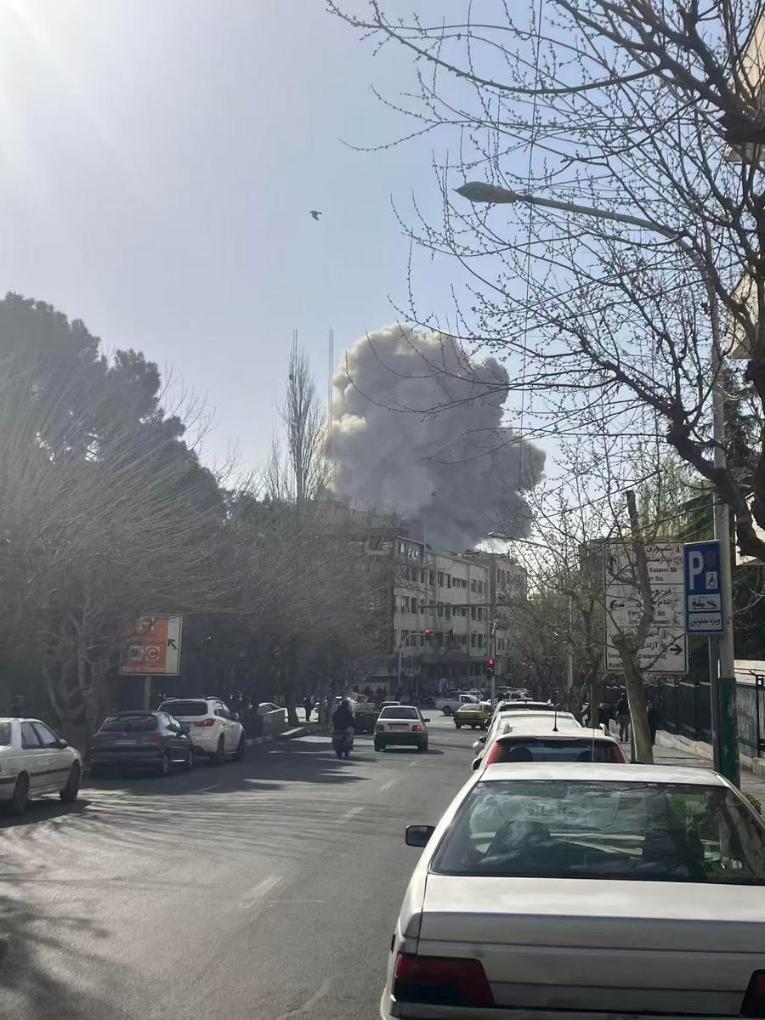
Videos verified by The New York Times showed strikes in central Tehran near the presidential compound, the Supreme National Security Council and other key government buildings, as well as near the Intelligence Ministry. CNN, citing Israeli security sources, reported that senior Iranian officials were among the intended targets.
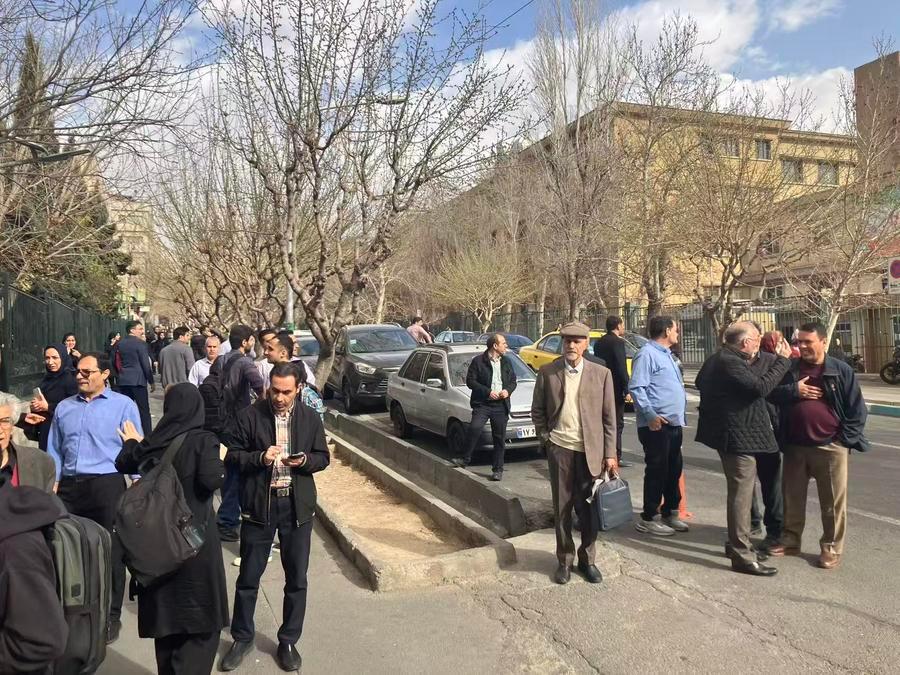
The U.S. military's targets appeared to extend beyond Iran's borders. An Iran-aligned militia base in Iraq was hit, according to reports, while Iran launched retaliatory strikes against Israeli targets and U.S. facilities across the region. Multiple U.S. embassies in the Middle East have instructed personnel to shelter in place.
The Pentagon has planned an escalating series of strikes with off-ramps along the way, CNN reported, citing a senior U.S. official who said each round will be over in a one- to two-day period with pauses to reset and assess battle damage.
The Trump administration mounted the largest U.S. military buildup in the Middle East since the 2003 Iraq War, deploying two aircraft carriers and multiple destroyers. Senior officials, including Vice President JD Vance, have said repeatedly that no U.S. ground troops would be sent into Iran.
LAWMAKERS PUSH BACK
Reactions on Capitol Hill were swift and divided.
Republican Senator Roger Wicker, chairman of the Senate Armed Services Committee, voiced his support of the attack on Iran.
"This is a pivotal and necessary operation to protect Americans and American interests," he said in a statement.
Jack Reed, the top Democrat on the U.S. Senate Armed Services Committee, said the Trump administration didn't provide Congress with any "real briefings or intelligence" ahead of the massive military operations against Iran.
"The president barely mentioned Iran during the longest State of the Union speech in history. He failed to define the objective," Reed said in a statement.
"Congress has received no real briefings or intelligence, and it is hard to justify action without rationale," the senator said.
Senator Ruben Gallego, a Democrat from Arizona and former Marine who had served in Iraq, said on social media early Saturday morning that Americans should not have to "pay the ultimate price for regime change and a war that hasn't been explained or justified to the American people."
Thomas Massie, a Republican House lawmaker from Kentucky, criticized the strikes on Iran as "acts of war unauthorized by Congress" in a social media post shortly after the U.S. launched the strikes on Iran.■












Comments